Wire Fencing
Wire Fencing Products at a Glance
| Format | Key specification | Best for | Details |
| Chain link fencing | Wire 1.6–4.0 mm · mesh 25–100 mm · heights 3–10 ft · 60–300 GSM | Boundaries, farms, sports grounds, factories | Chain link fencing manufacturer |
| Welded wire mesh | Wire 2.00–8.00 mm · aperture 25–200 mm · rolls to 2,700 mm | Security panels, guarding, gabions | Welded wire mesh |
| Profence barbed wire | 12 g (2.64 mm) · 4-point barbs at 3 in (76 mm) · 120–150 GSM | Farm boundaries, perimeter deterrent | Profence range |
| Profence fencing wire | 1.6–4 mm · 90–120 GSM homogeneous coating | Converters making barbed wire and chain link | Profence range |
| Agriculture and fencing wire | GI wire 0.90–6.00 mm · 30–366 GSM | Farm fencing, trellising, enclosures | Agriculture wire fencing |
| Gabion wire | 2.20–4.00 mm | Retaining walls, erosion control | Wire for gabions |
GI Fencing Wire: Gauge and Zinc Coating
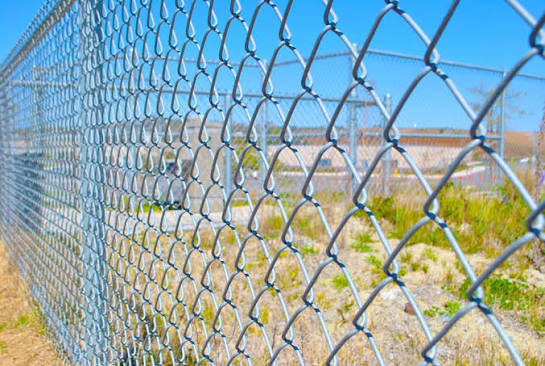
Two numbers decide how a GI fencing wire performs: gauge (thickness) and zinc coating weight (GSM). Heavier gauge resists cutting and impact; heavier coating resists corrosion. Systematic Group supplies GI fencing wire from 0.90 mm to 6.00 mm and 30 to 366 GSM, made from its own hot dipped galvanized wire.
| Use case | Gauge | Zinc coating |
| Residential chain link | 16–14 | 60–120 GSM |
| Farm and agricultural fencing | 14–12 | 120–275 GSM |
| Industrial and security | 12–8 | 120–275 GSM |
| Coastal or chemical zones | 12–8 | 275–366 GSM |
| Poultry and light enclosures | 20–16 | 90–300 GSM |
GI Mesh Fencing: Woven or Welded?
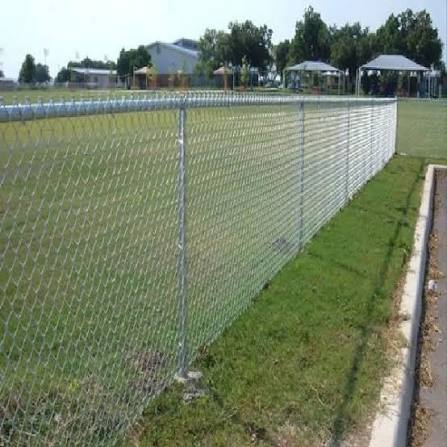
GI mesh fencing comes in two main builds. Chain link is woven into a flexible diamond that follows ground contours. Welded mesh is fixed at every crossing into rigid panels that are harder to climb. PVC-coated chain link adds a polymer layer where appearance matters. Compare all six mesh types in the GI mesh fencing comparison guide, and see how mesh is used in wire mesh for fencing
Choosing Wire Fencing by Application
Farm and crop protection
Chain link and barbed wire keep cattle, goats and wild boar away from crops. Heavy gauge and 120 GSM+ coating give years of outdoor service. For trellising inside the farm, see Agriline agricultural wire.
Livestock enclosures
Chain link in 12–10 gauge with 50–65 mm mesh resists animal impact without deforming.
Poultry farm security
Chain link with 40–50 mm mesh keeps predators out. Cages inside the shed need heavier coating — see Poultryline cage wire.
Industrial and residential perimeters
Chain link for boundary marking and general security; welded mesh panels where climb resistance matters; a barbed wire top row for deterrence. See the barbed wire guide.
Coastal and chemical environments
Specify the heaviest zinc coating, or Galvasys zinc-aluminium coated wire for barbed wire and chain link that must last longest.
Electric fencing
Alexa bimetallic wire combines 1,200+ MPa tensile strength with three times the conductivity of GI wire.
Standards and Quality
Fencing wire is hot-dip galvanized and conforms to IS 280. Systematic Group is BIS-certified and has manufactured galvanized wire since 2000, with wire drawing and galvanizing done in-house — see our manufacturing setup.
Wire Fencing Resources
- Top 10 reasons to use fencing wire
- Wire fence FAQs
- Chain link fencing guide
- Welded wire mesh fencing guide
- Barbed wire advantages
- Gabion wire guide